
Device and component makers
Show buyers how your equipment behaves under agreed test conditions.
IRONBYRD STRYX
STRYX records what a drone, camera or radio actually transmits once it is switched on, then turns the results into evidence that suppliers and buyers can file.
In development
Defence teams buy drones, cameras, radios and other connected kit from commercial supply chains. Supplier documentation describes what a device should contain. Testing in a shielded enclosure gives teams evidence of what it actually does once it is powered up and connected.
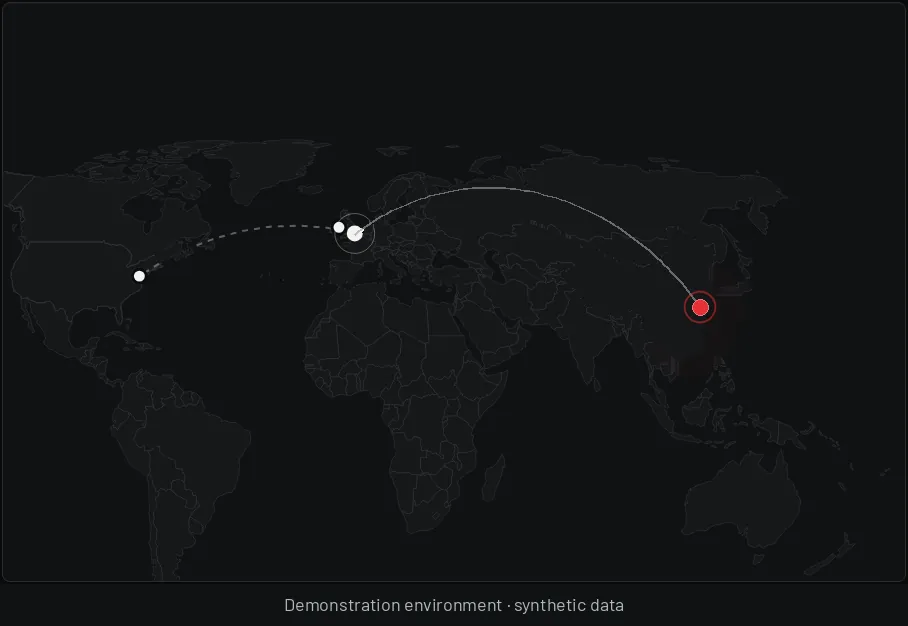
Each planned evidence pack brings the test conditions, observations and supporting records together so suppliers, engineering teams and buyers can review the same findings.
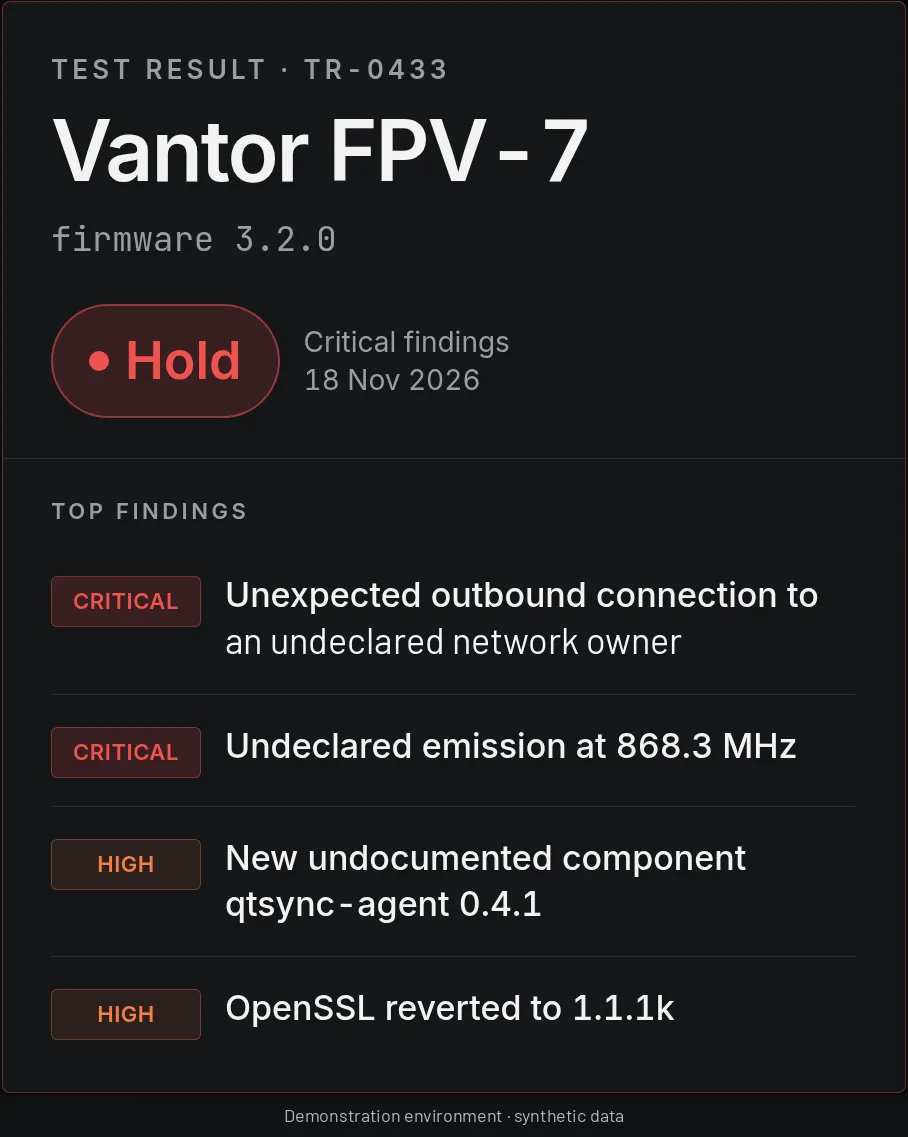
Show buyers how your equipment behaves under agreed test conditions.
Review how a supplier’s device behaves before incorporating it into a larger system.
Give procurement and engineering a common set of observations to review.
Assess the behaviour of cameras, radios and other connected devices ahead of deployment.
STRYX provides evidence of behaviour observed under the stated test conditions. Certification, accreditation and approval decisions stay with the relevant authorities and buyers.
The planned scope covers small drones, ground stations, cameras, radios, 3D printers and other connected equipment that fits in the enclosure.
The device and its firmware image are the starting points. Suppliers can provide source code if it helps explain a finding.
Initial development focuses on commercial equipment provided by suppliers who own it.
STRYX is in development. Register your interest to discuss how you would use the evidence.
STRYX is in development. If you build connected kit for UK defence or buy it, we’d like to hear what you need to prove and to whom.